
Wicomico Parole and Probation Compared
Parole and probation can both place a person under rules in the community, but they begin in different ways. Parole follows action by the Maryland Parole Commission after part of a prison term. Probation comes from a court order and may follow a jail term, a suspended sentence, or no confinement at all. Maryland also uses mandatory or conditional release for a qualifying prison term reduced by lawful credits. The Maryland Division of Parole and Probation, or DPP, supervises people in all three groups. It also performs enforcement and warrant work when an alleged violation occurs.
That distinction matters in Wicomico County. A person on probation is not necessarily a released state prisoner. A parole approval is prospective until all prerelease terms are met and the physical release occurs. Conditional release is supervised release, not the same as maximum sentence expiration. The Wicomico County released-inmate search and records path helps establish the completed custody event before supervision is assessed.
| Status | How it starts | What verifies it |
|---|---|---|
| Parole | Maryland Parole Commission action followed by satisfaction of prerelease conditions | MPC record, completed custody event, and DPP confirmation |
| Probation | Wicomico District or Circuit Court order | Court record and DPP office guidance |
| Mandatory or conditional release | A qualifying term reaches the point set by Maryland law after applicable credits | Agency release record, VINE event, and DPP confirmation |
- Parole
- Supervised release from a prison term after Commission action and required prerelease steps.
- Probation
- Court-ordered supervision that may accompany a suspended sentence or follow confinement.
- Mandatory release
- Supervised release tied to a qualifying term reduced by applicable diminution credits.
- Discharge
- The formal end of a sentence or supervision obligation, which is different from reduced active reporting.
Verify Wicomico Post-Release Supervision
No official Maryland public name search was verified for active DPP cases. The DPSCS incarcerated-individual locator cannot fill that gap. It lists covered people who are currently housed in state custody and expressly excludes people no longer in custody. It never provides a released or discharged result, a parole field, or a probation field. A no-match is not proof of Wicomico County release or supervision.
A sound check joins the custody event, the court or parole basis, and the supervising office. Use enough identifiers to avoid a same-name error. DPP may limit what personal case information it discloses, so ask what status can lawfully be confirmed and which office handles the case.
- Confirm the person and the last known custodian through Maryland VINE, the Wicomico court file, or an existing agency release record.
- Determine whether the legal basis is parole, probation, or mandatory release. A court disposition may establish probation, while an MPC record concerns parole.
- Contact the Salisbury DPP Field Office with the full name and other reliable identifiers. Ask whether active supervision can be confirmed and whether that office is assigned.
- If parole is involved, check the Maryland Parole Commission materials, but treat a hearing or approval as future-facing until release is separately confirmed.
- Request an existing releasable record from DPSCS when an office call and public court history do not resolve the status.
Maryland VINE can add event notice from detention, courts, parole, and probation sources. Official Maryland descriptions conflict on whether institution-to-institution transfers generate notices, so rely on the choices shown in the live registration screen. VINE is corroboration, not a full historical supervision archive.
Wicomico Supervision Office Details
Wicomico County’s state supervision contact is the Salisbury Field Office/DDMP in the District Court Multi-Service Center. The county directory calls the same local function “Community Supervision (formerly P&P).” That wording helps explain why a search for an old “P&P” label may lead to a current Community Supervision or DPP listing. Both county and state sources publish 410-713-3700, while the state directory also supplies a second office number and fax.
Division of Parole and Probation
Salisbury Field Office/DDMP
District Court Multi-Service Center
201 Baptist Street
Salisbury, MD 21801
Phone: 410-713-3700 or 410-713-3770
Fax: 410-713-3730
The official DPP office directory identifies the Wicomico and Salisbury row. Its captured directory view shows the local office context used for Wicomico County parole and probation routing.
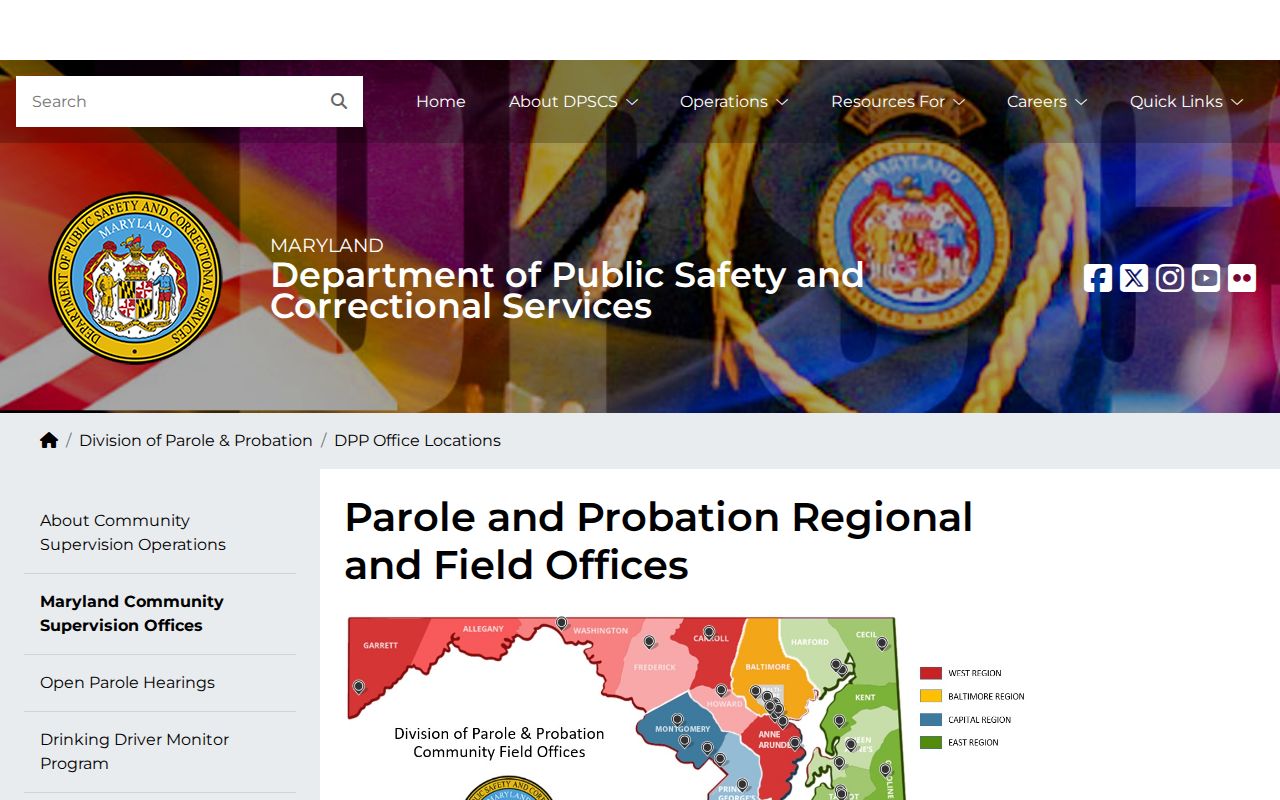
This office is the practical contact for asking how parole, probation, or mandatory-release supervision may be verified. It is not a public person-name database, and disclosure must not be promised.
Note: The county jail, the Parole Commission, and the Salisbury DPP office keep different records and should not be treated as one agency.
Wicomico Parole Hearing Records
The Maryland Parole Commission conducts parole hearings. Its agency page publishes a rolling annual Open Parole Hearings PDF, and the researched calendar is the 2026 master list. The list covers open hearings only. It is neither a complete hearing index nor a person-level decisions database. Commission meeting minutes are governance records and must not be repackaged as individual outcomes.
The Maryland Parole Commission landing page provides the official hearing-calendar route and Commission contact. The page capture documents that source without implying that every Wicomico County parole case appears there.
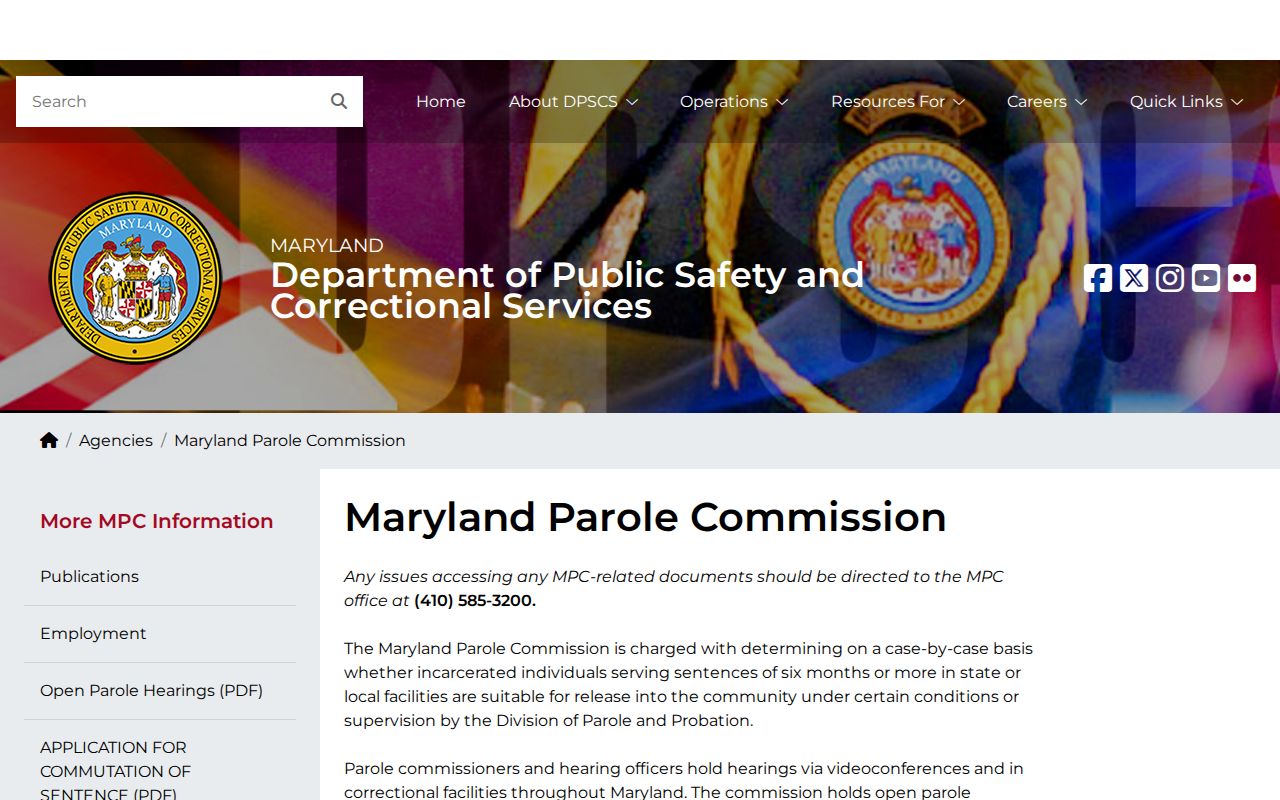
A scheduled hearing establishes only that a proceeding is planned. It does not establish approval, release, or active supervision.
Official outcome terms have narrow meanings. “Approve” means release after prerelease conditions are satisfied and can be suspended if requirements are not met. “Rehear” sets another hearing at a future point. “Refuse” means no further parole hearings. Deferral may occur while more information or Commission action is pending. None supplies the physical date that a person left a Wicomico or Maryland facility.
Wicomico Supervision and Violations
Conditions vary with the court order, release certificate, and case. DPP supervises compliance and performs enforcement or warrant functions when a violation is alleged. A violation can lead to a warrant, hearing, change in reporting, or return to custody, but the existence and outcome of each step must come from the responsible court or agency. The label “absconder” generally means a person is alleged to have stopped reporting or left supervision without approval. It is not a final finding by itself.
Maryland VINE may offer parole or probation event choices, while a Wicomico court record may show a violation filing or warrant-related event. The live VINE menu controls because official state sources disagree about transfer notices. For direct confirmation, use DPP and the court that issued the order. If a person reenters custody, identify whether the custodian is Wicomico County, DPSCS, federal authorities, ICE, or another county before drawing a conclusion.
Note: A warrant or detainer can block community release even when one sentence or projected custody term reaches its expected endpoint.
Wicomico Reentry and Work Release
The Wicomico County Department of Corrections mission expressly includes successful reentry and effective community supervision. Its work-release rule is more specific than a general claim that court approval guarantees placement. The sentencing judge authorizes the privilege, but the Director decides whether the person is approved for the local program. A violation can return a participant to the general population.
Work release is therefore a controlled program status, not proof of final discharge. The same care applies to terms found in Wicomico’s 2019 Community Corrections audit, including pretrial release, electronic monitoring, house arrest, community service, drug court, and home detention. That audit described weekly telephone or in-person check-ins and location review for some programs. Those details are historical and should not be assumed unchanged. Each status may move a person outside a cell while court or program control continues.
The local distinction also prevents confusion with state parole. Wicomico work release turns on court authorization and county approval. Maryland parole turns on Commission action, prerelease conditions, an actual prison release, and DPP supervision. A record should identify which process applies.
Wicomico Release Property Pickup
Post-release supervision questions often arise while personal property remains at the Wicomico County Detention Center. County policy gives a released person 30 days to collect it. An authorized receiver needs a Property Release Form signed by the inmate, receiver, and witness, plus photo identification. Pickup is available Monday through Friday from 8:30 a.m. to 3:30 p.m. Calling 410-548-4850 extension 324 first can confirm that the form arrived.
A transfer to Maryland DOC is different from release. A person transferred to state custody may take limited items and must arrange for the rest within the same 30-day period. That rule is a concrete sign that leaving the county facility does not always mean entering the community or starting Wicomico County parole and probation. The receiving custodian and later supervision record determine what occurred.
The Wicomico County property instructions provide the current form, signature, identification, and pickup details. Verify them before travel because property access and supervision reporting are separate tasks.
Wicomico Supervision and Discharge
Release from a facility does not end every legal term. Active parole, probation, or mandatory-release supervision can continue in Wicomico County. Maryland Correctional Services §6-117 provides earned compliance credits that may reduce active supervision for qualifying compliant months. Reduced or abated active reporting does not necessarily change the legal expiration date or remove every duty. “Not actively supervised” and “sentence fully discharged” are different conclusions.
Confirm the ending status with the source that controls it. DPP handles state supervision records. The Wicomico court file controls a court-imposed probation order and may show modification or closure. A releasable agency record can document discharge where no public name lookup exists. For parole, Commission materials explain the release decision, while DPP and the later record establish whether supervision remained active and when it ended.
A completed release event, active-supervision status, reduced active reporting, and final discharge are four separate facts. Keeping those facts apart produces the clearest Wicomico County parole and probation record.